Christmas Miracle on King Street
By: Susanne Sims
Many years ago, sometime just before Christmas, my friend Carol called with an urgent request.
“I need to ask a favor,” she said. “My sister Sharon needs to come to Honolulu to find her missing daughter. I’m wondering if you can help?”
Carol explained that Sharon had not seen her daughter Tanya in almost seven years. Tanya was last living on Maui and it was likely that she was homeless and living on the streets.
I immediately said yes, offering Sharon a place to stay and my help.
I was acutely aware of the homeless crisis in Hawaii. At the time, I managed a charity thrift shop called “Twice Blessed” where a percentage of our proceeds were used to provide meals to the homeless. Once a week these meals, together with clothing, were delivered to a nearby park in Waikiki. Until Sharon arrived, I would begin looking for Tanya there.
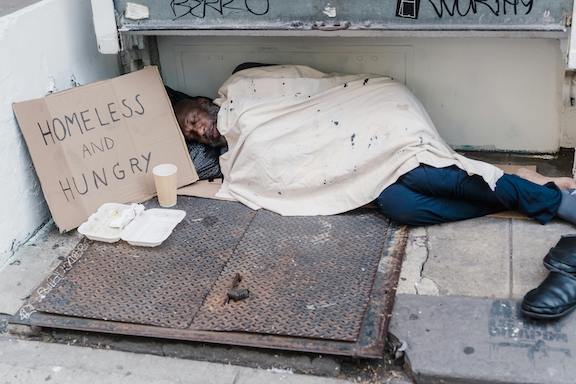
Despite its glowing image as one of the world’s most desirable vacation destinations, Honolulu has more homeless than any comparably sized city. Visitors are often shocked to find residents camped on sidewalks and parks, sleeping in their cars, or living in structures cobbled together from discarded materials.
An award-winning documentary entitled “No Room in Paradise” (Green Island Films, 2016) provides an in-depth look at the extent of the problem. The film follows two families who struggle for more than a year as they move from sidewalk tents, to subsidized housing.
Hawaii’s extremely high cost of living and lack of affordable housing put many families on the edge, surviving paycheck to paycheck. Native Hawaiians are especially marginalized living in makeshift housing along the beaches. Other sectors of the unhoused include drug addicts, military vets, and those released from prison who lack employment opportunities.
Micronesians comprise another demographic. Micronesia, a trust territory of the United States, was part of the Pacific Proving Grounds where 105 atmospheric and underwater nuclear tests were conducted between 1946 and 1962. These islands are still contaminated and those living there at the time of testing have suffered from increased and varied health problems. Seeking medical help, they come to Honolulu with little or no means of support.
But it was the mentally ill who became the first victims of homelessness, throughout the United States. In the 1980s, Regan-era policies closed state hospitals around the country. At the time it was believed that advances in prescription drugs for psychotic conditions were so promising, those with mental disabilities could live independently or move back home. Families caring for these individuals found the burden to be enormous, and the medications did not always live up to their claims.
Sharon arrived the following week and I learned more about her life with Tanya. She told me it was a difficult pregnancy and during the birthing process, a lack of oxygen resulted in an injury to Tanya’s brain. Tanya would struggle the rest of her life with a learning disability and poor social skills.
Sharon had friends living on Maui who encouraged her to move there. The gentle, island lifestyle proved to be a good environment in which to raise Tanya.
“She could function fairly well when she took her medications,” Sharon explained. “But they also made her depressed and withdrawn.”
As an adult, Tanya became eligible for disability and housing assistance. After watching her daughter live independently for a few years, Sharon felt confident that she could move back to the mainland, while Tanya remained on her own in Maui.
Sharon relied on her Maui friends to inform her about Tanya’s whereabouts. For a while things progressed smoothly, but over time, contact with Tanya became sporadic and then ceased. Was she even on Maui, or anywhere in Hawaii for that matter?
Sharon would start by contacting The Institute of Human Services, a private non-profit organization that provides services to the homeless and keeps records of those living unsheltered. But first, she would need to make copies of several papers that the agency would need.
There was a small copy shop on King Street, located next to a food co-op that I shopped at. I would get groceries while Sharon made the copies.
As we stood by the entrance to the copy shop, a homeless woman, perhaps in her forties, passed by. Her face and clothes were terribly soiled and she exhibited a wild, feral energy. The woman stopped, looked directly at Sharon, and said matter-of-factly, “Hello, Mother.”
Sharon did not immediately recognize that this was, indeed, Tanya. I walked away to avoid disturbing them, and Sharon acted quickly to find out as much as she could.
When Sharon met up with me in the grocery store, she was certainly rattled by the encounter and especially shocked to see how much Tanya had aged and deteriorated.
I too was stunned at this miraculous encounter. In a city with a population of a million people, what were the chances of them simply bumping into each other?
“She’s agreed to meet me at the McDonald’s, a few blocks from here. I’ll call you later,” Sharon told me as she dashed off.
When we reconnected later that day, I was eager to know everything.
“Tanya told me she’d been having dreams about me, and that she knew I was coming to find her,” Sharon said.
While Tanya may not have been endowed with “normal cognition” she did have super powers when it came to intuitive perception.
Over the next few days Sharon managed to get Tanya showered and into a change of clothing. She found out where Tanya spent her time —which streets, parks and neighborhoods she hung out in.
Sharon tried to coax her to go to a doctor, and to get back on her medications, but to no avail. She made efforts to find her housing at a local shelter, but Tanya resisted. Tanya had long ago stopped complying with the steps necessary to get her monthly disability funds and she was uncooperative when Sharon tried to encourage her to re-apply for assistance.
Her condition was heartbreaking and there were a myriad of challenges to contend with. Incoherent, delusional and prone to anger, Tanya hallucinated, often acting out imaginary scenarios and was difficult to reason with.
In the end, Sharon felt the only strategy left was to make contact with anyone who might interact with Tanya, including the manager of a nearby convenience store. Sharon gave the store manager a pre-paid credit card to be used for Tanya’s food purchases.
She also went to the library where Tanya spent time, introducing herself to the staff and exchanging contact information. I too would keep my eyes out for Tanya.
On her last day in Honolulu, Sharon and I celebrated with a glass of champagne toasting the “Christmas Miracle on King Street.” Yet it had been a bittersweet journey and Sharon was sad and anxious as she prepared to depart.
Months later, Tanya appeared at the thrift store while I was working. I approached her cautiously and told her that I knew her mother.
“That’s not my mother,” she said, making up a story and a name about the fictional character she identified as Sharon. She fled the store and I never saw her again.
At Christmas, I often think of Sharon and Tanya. I reflect on the hardships faced by those who suffer with mental illness, and the devastating impacts to their families and loved ones. And I give thanks for the abundance in my life and those meaningful moments when I can pay it forward.
Photo by Timur Weber: Burst Photos